Selected Publications
-
![]()
![]()
Variational Visual Question Answering for Uncertainty-Aware Selective Prediction (TMLR 2026)
We show that variational learning makes vision-language models safer: training with IVON instead of AdamW improves calibration and selective prediction, especially at very low risk levels. We also propose a risk-averse selector that uses the posterior’s prediction variance.
-
![]()
![]()
SIEVES: Selective Prediction Generalizes through Visual Evidence Scoring (NeurIPS 2026)
Selective prediction usually relies on a model’s internal confidence. SIEVES instead lets the model point to the image regions behind its answer and trains a selector to judge this visual evidence. It generalizes to out-of-distribution data and also works with closed models like o3.


We approach this problem from complementary angles. Bayesian methods handle uncertainty in a principled way by considering many plausible models instead of just one. We aim to apply these principle to modern Vision-Language Models and agents (Tobias). Learned selectors instead train a separate model to judge whether an answer can be trusted, for multimodal models by checking whether it is actually supported by the visual evidence it relied on (Hector). Beyond single predictions, we study how models can use uncertainty to decide what to do next: answer, ask, or look again.
Curious about how models can know what they don’t know? We have thesis and project topics available – feel free to get in touch, preferably both by using our contact form and a quick ping by mail.
Experts
| Name | Working area(s) | Contact | |
|---|---|---|---|

| Tobias Wieczorek M.Sc. | Uncertainty, Selective Prediction, Probabilistic Methods | tobias.wieczorek@tu-... S4/23 211 |

| Hector Garcia Rodriguez M.Sc. | Adaptability, Modularity | hector.garcia_rodriguez@tu-... S4/23 207 |
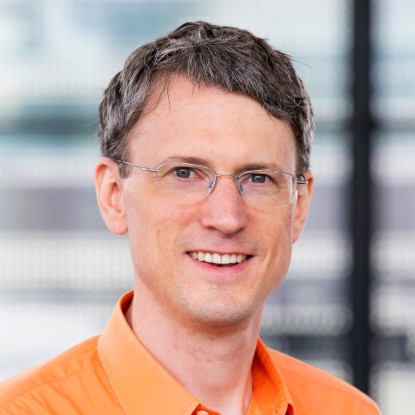
| Prof. Dr. Marcus Rohrbach | Multimodal Reliable AI | office@mai.tu-... S4/23 204 |